A better brief.
A more useful
manufacturing discussion.
Prepare a practical brief for custom tooling and molded parts. Include the current revision, quantity outlook, mating interfaces and the requirements that determine manufacturing choices.
The current design.
The intended use.
An estimated quantity.
Mark unknowns as “to be discussed.” A missing answer is more useful than a guessed specification.
Include what changes
the manufacturing scope.
Name the part and revision.
Identify which CAD and drawings belong together. Explain whether the design is stable or being revised, and include mating components where they define a fit.
Separate knowns from open questions.
Provide the full material grade if fixed. If it is open, describe use, environment and required performance. Treat finish and color the same way.
Give quantities a clear basis.
Distinguish samples, the first order and the expected repeat demand. If there are several components, specify whether the quantity applies to each part or complete sets.
Mark what matters.
Identify visible surfaces, critical fits, fixed interfaces and parts that cannot change. State the function behind a restriction where possible.
Define the offer you need.
Ask for tooling, samples and production parts separately. Include secondary operations, inspection, packing and the delivery basis where relevant.
A brief with useful
open questions.
Original illustration of an enquiry, not a customer project or a quotation. The quantities below are comparison inputs, not minimum order quantities.
| Topic | Example information | Why it helps |
|---|---|---|
| Design | Two-piece equipment housing, CAD revision B. PCB position fixed; side opening still under review. | Identifies the files and the part of the design that may change. |
| Material | Grade open. Operating environment and performance requirements to be supplied. | Avoids treating a placeholder resin as an approved specification. |
| Quantities | Compare 500 and 1,500 of each component. Repeat demand not yet confirmed. | Defines the pricing basis without pretending a forecast is an order. |
| Appearance | Front and top faces visible. Color reference and texture to agree. | Directs the discussion to the cosmetic surfaces. |
| Assembly | Mating cover and PCB geometry available. Screw specification pending. | Shows which inputs exist and what is still needed. |
| Offer | Separate tooling, samples and parts. Identify additional operations and packing assumptions. | Makes the commercial scope easier to compare. |
The missing file can change
the tooling decision.
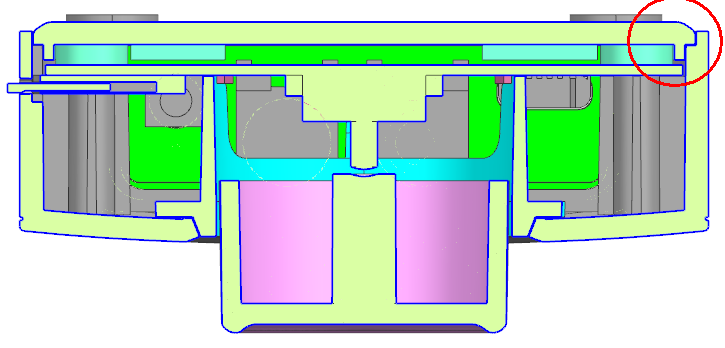
The joint appearance in this example depends on the relationship between two components. A radius change is meaningful only when the assembled section, required gap and approved geometry are understood together.
Send the PCB position, screw specification and fastening requirement. They determine whether the inner hole or outside diameter can change when thinning the wall.
List quantities by version and mark acceptable contact marks. The tooling review compares separate cavity components with a shared arrangement; quantity alone cannot settle the appearance trade-off.
Include the mating section and intended movement or gap. Mark gate-sensitive faces, switch position and any light-leak requirement.
Provide the intended hole pattern, visible surfaces, finish reference and appearance expectations. These affect shutoff geometry, limits samples and any proposed coating route.
“High precision”
needs a functional reference.
For a part like the cartridge housing, send more than a tight tolerance: show the chip interface, three flow paths, common datums and which surfaces control bonding. Include the mating geometry and how alignment and isolation will be accepted.
That information lets us connect the precision requirement to the tool design, molded-part checks and functional review. If a requirement is still open, mark it as an open question.
See why these inputs matter
Start with the
questions you have.
A first discussion can identify scope and missing information. It does not require every production requirement to be finalized. Describe what is known, what is still changing and which decisions you need help to discuss.
Understand the manufacturing process ↗“No draft” needs a marked face.
“Fits the lid” needs the lid.
Our four-slider enclosure case combined a fixed exterior, appearance requirements and a four-screw mating panel. A useful brief for a similar project includes:
- The exact faces that must remain at zero draft, with the reason.
- The visible regions where slider junctions matter and an appearance reference.
- The mating-panel model, locating scheme and screw positions.
- The material, current revision and initial / repeat quantity outlook.
Open items can be listed as questions. You do not need to invent a tolerance or inspection method to begin the discussion.
See how these inputs affect the mold and assembly ↗Perforations, buttons or a removable panel?
For a perforated part, mark holes that must remain fully open and identify the visible face. For buttons, include the carrier, cover and electronics geometry plus the required movement. For a removable panel, show its seating edge, fasteners and connector positions. These inputs are more useful than asking for “high precision” across the entire part.
Add the input
that the geometry makes essential.
Large ribbed housings
Include the overall envelope, mounting datums, mating components and any coating/masking specification. A press tonnage alone is not a manufacturing brief.
Why those inputs change the housing review ↗Curved, multi-clip parts
Include the mating CAD, locating sequence, assembly/retention requirements and free-state versus assembled measurement condition.
Why a local clip dimension is not enough ↗Send a useful brief.
Build from there.
Start with your design, quantity outlook and the requirements that matter.
Add the material and
surface requirements.
For overmolding: include the hard and soft material grades if known, target hardness, soft-region boundaries, contact conditions and attachment requirements.
For a decorative texture: identify the visible face, pattern direction, texture reference, resin/color and proposed appearance approval conditions.