Soft overmolding & component production
Two materials.
One working part.
Soft contact surfaces and rigid locating features need to work as one component. We develop the mold and supply the parts, with material compatibility, interface quality and repeat production considered together.

Give each material
the right job.
A rigid part holds an interface in position. A softer region can provide compliant contact, grip or cushioning. The useful question is where your product needs each behavior—and how the materials stay together through use.
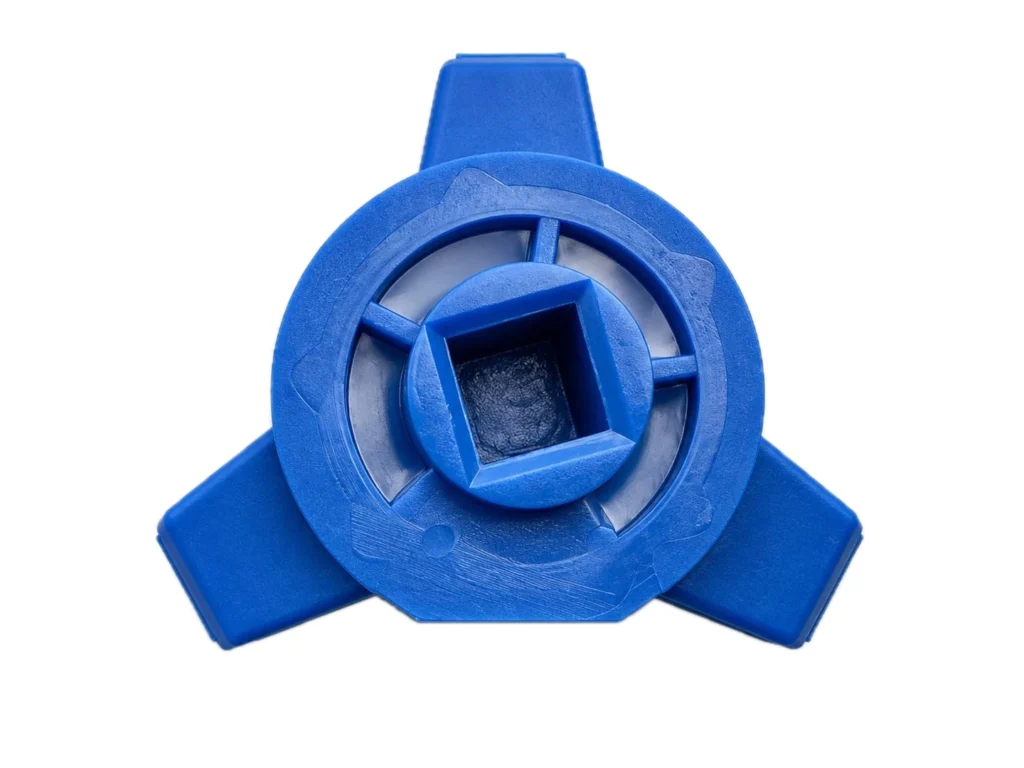
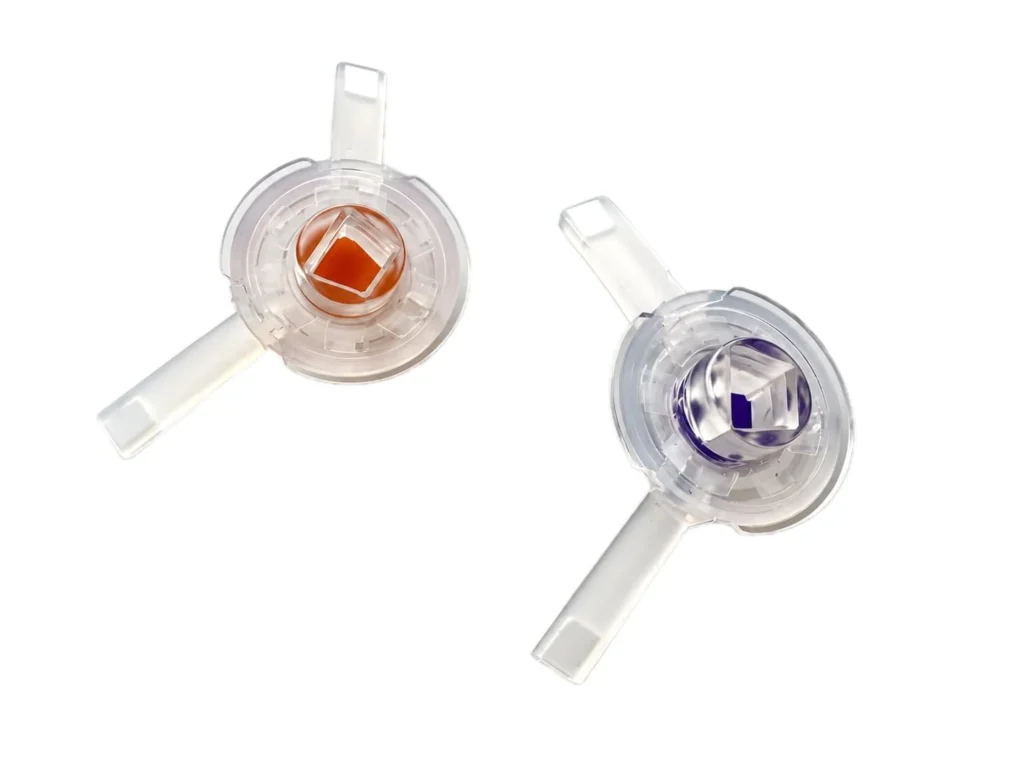
Actual component family shown. Material grade, hardness and acceptance tests are selected for your application; appearance alone does not establish bond strength.
The difficult part
is the interface.
Adding soft material changes the tooling and the production questions. These are the decisions we work through before the mold is committed.
Choose a compatible pair.
A soft resin is not automatically compatible with a hard substrate. We review the exact resin grades, additives, intended hardness and contact conditions. Where the load calls for it, we consider mechanical retention as well as adhesion.
Your input: what touches the soft region, and what force tries to separate it?
Keep soft material out of the fit.
The mold must locate and support the rigid part while defining a clean overmold boundary. A drive opening or assembly seat still has to fit after the second material is molded. Shut-off design and the substrate’s dimensional variation belong in the same review.
Your input: mark the areas that must remain free of soft material or flash.
Let both materials cool into the right shape.
Different shrinkage behavior can pull a thin substrate out of shape. Soft-section thickness, support and the material combination need to be considered together, rather than correcting the shape only after a trial.
Your input: share the mating part and the condition in which fit will be checked.
Technical background: Avient material selection and overmold part design. Project choices depend on the selected grades and geometry.
A physical tool.
A repeatable route.
Our component work includes the mold as well as the molded parts. These production-mold photographs show both sides of the tool, its installation in the press and parts beside the mold. The rigid locating geometry is the starting point for controlling the complete component.


Look inside the mold and press


From one component
to production batches.
The production photographs extend the story beyond a single presentation sample. They show a family of molded components in clear and colored variants, alongside the tooling used in the work.


Scroll the photographs to see more production views. Batch photographs demonstrate physical production; functional acceptance is agreed against your part requirements.
Material identity comes first.
We purchase virgin, first-grade resin and do not use recycled or reprocessed feedstock. For an overmolded part, both material grades and the color system need to be defined.
Define what passes.
Agree the attachment test, soft-region coverage, flash limits, critical fit and color reference. For a gripping or cushioning function, include the actual contact condition.
Control the interface conditions.
Substrate cleanliness, moisture, processing temperatures and colorant compatibility can affect attachment. The setup needs to follow the selected material’s guidance.
Keep the owner close to the issue.
The factory owner also manages projects, bringing tooling and molding decisions together directly when a sample or production issue needs attention.
Process background: Avient overmolding processing guidance.
More component and batch views


Does your part combine
soft contact and a precise fit?
A housing with a grip area, a supported soft contact feature or a working component with a rigid center may raise similar questions. Send the CAD, the two intended materials if known, the soft regions and what the assembled part must withstand.
Bring the interface.
We’ll review the whole part.
Share the intended function, quantities and material preferences. We will work through tooling and part supply with you.